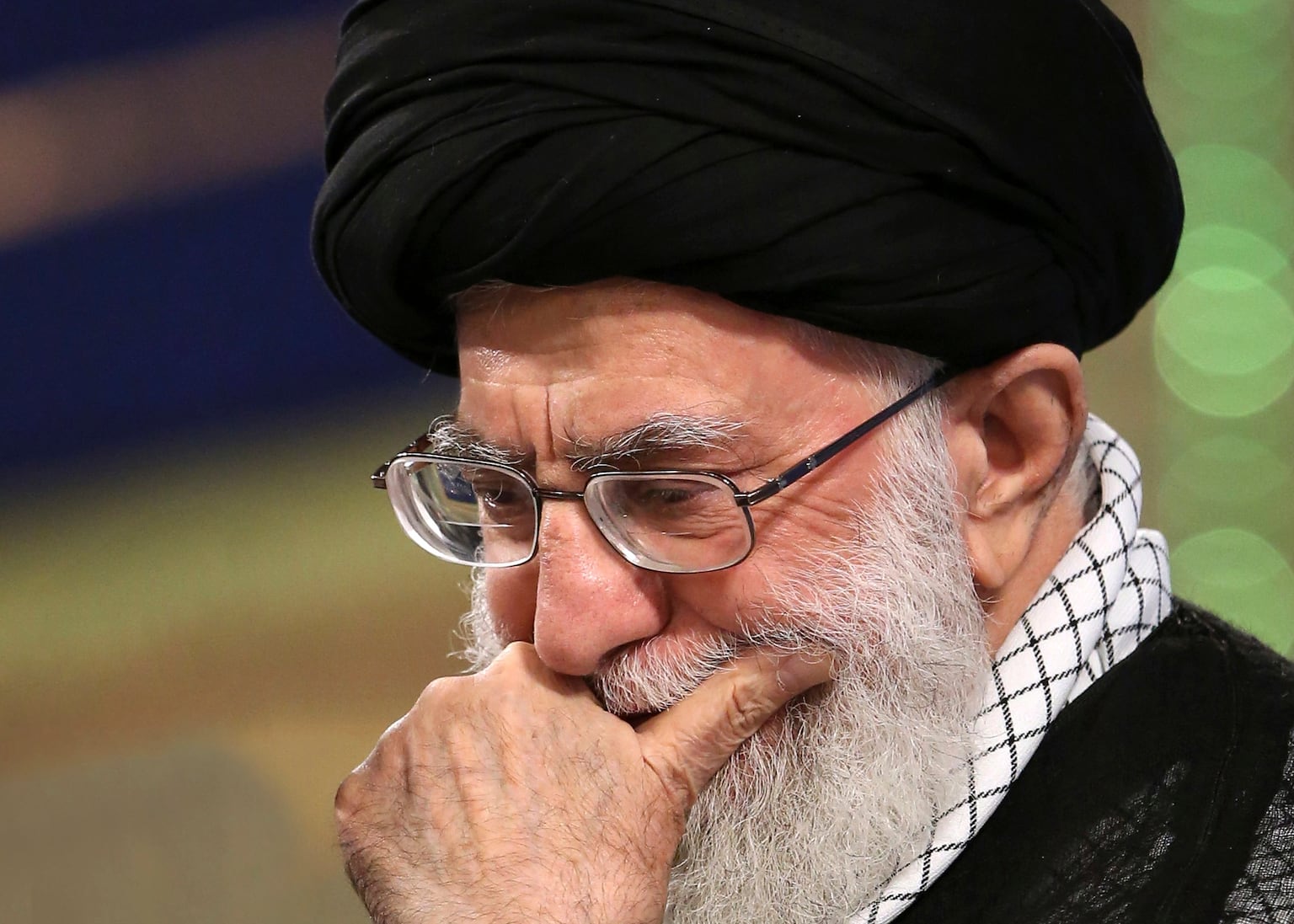
The Death of Iran’s Supreme Leader and the Escalation of Conflict
Supreme Leader Ayatollah Ali Khamenei, the most powerful figure in Iran’s theocratic regime, has reportedly died following a major attack on Iran launched by Israel and the United States. This development has sent shockwaves through the region and raised concerns about the future stability of Iran.
The assassination of Mr Khamenei, who had no designated successor, would throw the country’s political landscape into uncertainty. It also raises the possibility of prolonged conflict, as Iran has vowed to retaliate against the attacks.
In a nationally televised address, Israeli Prime Minister Benjamin Netanyahu stated that there were “growing signs” that Mr Khamenei had been killed when Israel struck his compound early on Saturday. Shortly after the address, two officials confirmed the death of the Iranian leader.
Mr Khamenei, who succeeded Ayatollah Ruhollah Khomeini, was the final authority on all major policies in Iran. He led the country’s clerical establishment and its paramilitary Revolutionary Guard, the two main pillars of power in the theocracy.
US President Donald Trump reportedly confirmed the reports, stating that “a large amount of leadership” of Iran had been killed. He added that “most” of Iran’s senior leadership is “gone,” including many decision-makers.
When asked about who might become Iran’s new supreme leader, Mr Trump humorously suggested that Iranians might eventually ask him for his opinion. However, he quickly clarified that he was being “only being a little sarcastic.”
Impact of the Attack
The Israeli military claimed the strikes also killed several high-ranking Iranian officials, including Mohammad Pakpour, the commander of the Iranian Revolutionary Guard Corps, and defense minister Aziz Nasirzadeh. Ali Shamkhani, the secretary of the Iranian Security Council, and Mohammad Shirazi, the head of Mr Khamenei’s military bureau, were also reported to have been killed.

Following the attack, Mr Trump called on the Iranian people to “take over your government.” Meanwhile, Iranian state media, citing the Red Crescent, reported at least 201 deaths. The first strikes appeared to target the compound of Iran’s 86-year-old Supreme Leader in central Tehran.
Iranian foreign minister Abbas Araghchi told NBC News that Mr Khamenei and President Masoud Pezeshkian are alive “as far as I know.” However, Mr Trump’s video message on social media painted a different picture, claiming that the Iranian regime has engaged in a campaign of bloodshed and mass murder targeting the United States and its allies.
Escalation of Violence
The violence quickly escalated with the Revolutionary Guard responding by launching a “first wave” of drones and missiles targeting Israel. A nationwide warning was issued in Israel as the military worked to intercept the incoming fire.
Iran’s Foreign Ministry stated that the country “will not hesitate” in its response, emphasizing that it will defend the homeland and confront the enemy’s military assault.

Bahrain reported a missile attack targeting the US Navy’s 5th Fleet headquarters in the island kingdom. Witnesses heard sirens and explosions in Kuwait, home to US Army Central, while explosions were heard in Qatar.
Despite “hundreds of Iranian missile and drone attacks,” the US military reported no casualties and minimal damage at bases. Targets in Iran included Revolutionary Guard command facilities, air defense capabilities, missile and drone launch sites, and military airfields.
Iraq and the United Arab Emirates closed their airspace, and sirens sounded in Jordan. The UAE reported one death from falling shrapnel, while air defense fire was seen over Dubai.
Regional Implications
The Iranian-backed Houthis in Yemen vowed to resume attacks on Red Sea shipping routes and on Israel, according to two senior officials. Mr Trump claimed that the US had begun “major combat operations in Iran” after assembling a vast fleet of fighter jets and warships in the region.
He argued that Iran continues to develop its nuclear programme and plans to develop missiles capable of reaching the US. While acknowledging the potential for American casualties, he said, “that often happens in war.”
Iran has stated that it has not enriched uranium since June but has blocked international inspectors from visiting bombed sites. Satellite images analyzed by the Associated Press have shown new activity at two of those sites, suggesting Tehran may be trying to assess and recover materials.

Iran has a self-imposed limit on its ballistic missile programme, restricting their range to 1,240 miles. This puts all of the Middle East and parts of eastern Europe within reach. There is no public evidence that Iran seeks intercontinental ballistic missiles, although Washington has expressed concerns about its space programme potentially enabling such capabilities.
Tensions have increased in recent weeks as American warships moved into the region. Mr Trump sought a deal to constrain Iran’s nuclear programme, seeing an opportunity amid growing dissent in Iran following nationwide protests.
International Reactions
Mr Netanyahu stated that the attack aimed to “remove an existential threat posed” by Iran. According to an official source, targets in the Israeli campaign included Iran’s military, symbols of government, and intelligence facilities.
Iran’s Revolutionary Guard had previously vowed to respond if attacked, including targeting American military personnel and bases across the region.
Explosions rocked Israel as the country worked to intercept incoming Iranian missiles. There was no immediate word on any damage or casualties. Several hospitals in Israel launched emergency protocols, moving patients and operations to underground facilities.

US embassies or consulates in Qatar, the United Arab Emirates, and Israel urged staff to shelter in place and recommended all Americans do the same until further notice.