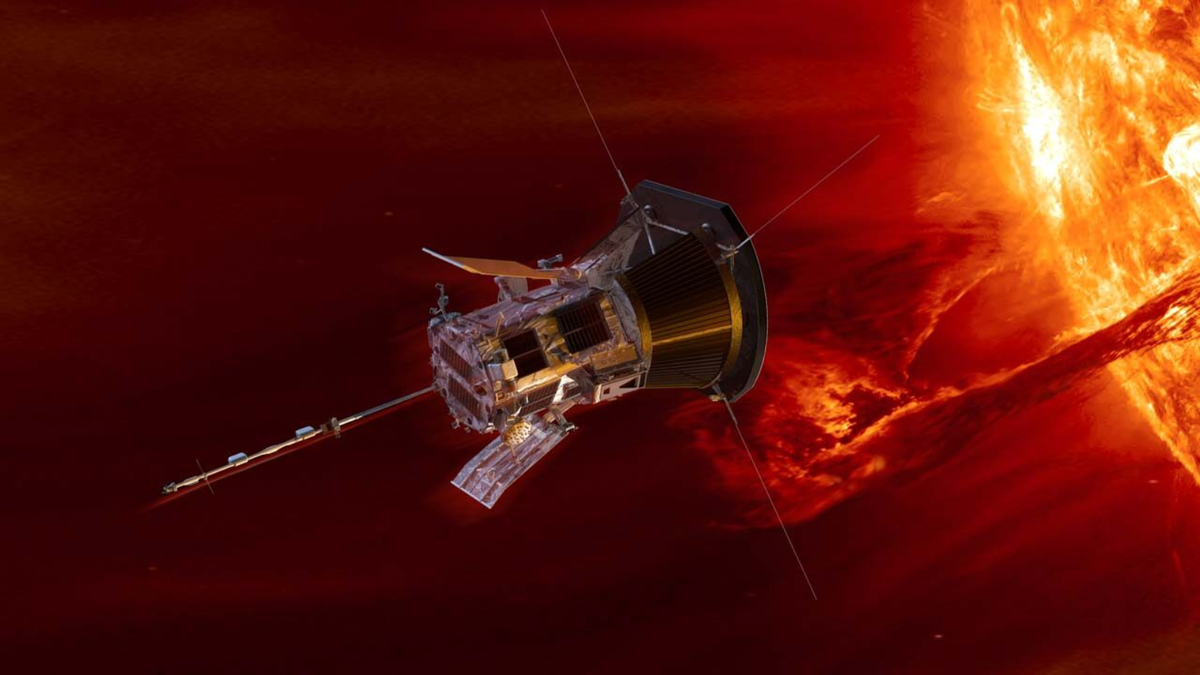
NASA’s Parker Solar Probe has made a significant breakthrough in space exploration by observing interstellar comet 3I/ATLAS, providing a fresh perspective on an object passing through our solar system from outside. According to a recent study by NASA, conducted between October 18 and November 5, 2025, these observations were made possible using the spacecraft’s WISPR instrument. The findings offer an unprecedented look at this cosmic traveler, adding new dimensions to our understanding of interstellar phenomena.
Discovering Comet 3I/ATLAS:
In 2025, NASA’s Parker Solar Probe ventured beyond its usual mission of studying the Sun to capture images of something truly extraordinary: comet 3I/ATLAS, an interstellar visitor that came from outside our solar system. The probe’s journey to gather images of this comet marked a significant moment in space exploration, as it was one of the few opportunities to study a comet that could not be viewed from Earth due to its proximity to the Sun. The spacecraft took about 10 images of the comet each day, offering scientists a chance to observe this celestial body during a crucial period when it was near its closest approach to the Sun.
The comet was situated about 130 million miles from the Sun at the time—just beyond Mars’ orbit—placing it in the middle of the solar system’s inner reaches. These images provided valuable data that can now be used to better understand the comet’s composition, trajectory, and behavior as it traversed through our solar neighborhood. NASA’s innovative use of the Parker Solar Probe for this purpose is a significant achievement in the field of heliophysics, broadening the scope of interstellar research.
How Parker Solar Probe Captured the Images:
One of the primary instruments used to capture these groundbreaking images was the WISPR (Wide-Field Imager for Solar Probe) aboard the Parker Solar Probe. WISPR is specifically designed to take images of the solar corona, but in this case, it was used to capture the comet as it passed through the spacecraft’s field of view. The Parker Solar Probe’s location, which was speeding away from the Sun after its 25th solar flyby, allowed it to get a clear and unobstructed view of the comet’s movement behind the Sun. From this vantage point, Earth-based telescopes were unable to observe the comet due to its alignment with the Sun, thus making the Parker Solar Probe’s observations even more valuable.
The spacecraft’s observations from its unique orbit allowed it to snap images of the comet at angles and times that would have been impossible from the Earth’s perspective. Although the images are still undergoing processing to account for variables such as stray sunlight and differences in exposure times, the initial data has already provided incredible insights into the comet’s behavior as it approached its closest point to the Sun.
The Significance of Comet 3I/ATLAS:
Comet 3I/ATLAS was discovered by the ATLAS (Asteroid Terrestrial-impact Last Alert System) survey telescope in Chile in July 2025. This comet is the third known object to originate from outside our solar system, following in the footsteps of ‘Oumuamua and Comet 2I/Borisov. The interstellar nature of Comet 3I/ATLAS offers scientists a rare opportunity to study a cosmic body that has traveled across vast distances, potentially from another star system.
What makes 3I/ATLAS particularly intriguing is not just its origin but also the way it behaves as it enters our solar system. By studying these interstellar visitors, scientists hope to better understand the materials and conditions that exist in other star systems, offering new insights into the processes that shaped our own solar system. This comet could hold clues to the chemical and physical conditions of the interstellar medium, which may vary significantly from what we experience in our solar system.
The Challenges of Observing a Comet Too Close to the Sun:
One of the primary difficulties in observing Comet 3I/ATLAS was its proximity to the Sun. When the comet came close to the Sun, it became too faint and obscured by the bright light of the Sun from Earth’s perspective. However, Parker Solar Probe’s unique mission orbit allowed it to study the comet from a position that offered clear views that were otherwise impossible from Earth.
Despite these challenges, the WISPR instrument’s ability to capture detailed images of the comet is a testament to the technological advancements NASA has made in space exploration. The instrument’s sensitivity, combined with the spacecraft’s speed and positioning, enabled the team to get images of the comet during a time when it was hidden from terrestrial telescopes. The data being processed now will help refine our knowledge of the comet’s features, including how it brightened or dimmed as it neared the Sun, providing vital clues about its composition and activity.
Collaborating Missions and Other Observations:
Interestingly, Parker Solar Probe was not alone in its observation of Comet 3I/ATLAS. Other NASA missions, including PUNCH (Polarimeter to Unify the Corona and Heliosphere), STEREO (Solar TErrestrial RElations Observatory), and SOHO (Solar and Heliospheric Observatory), also tracked the comet, helping to provide a broader understanding of the interstellar object’s journey through the solar system. These missions offer complementary data that, when combined with Parker’s observations, will provide a richer picture of Comet 3I/ATLAS and its significance.
The combined efforts of these missions highlight the collaborative nature of space science, where data from different instruments and spacecraft work together to deepen our understanding of the universe. As more data is processed and analyzed, researchers will continue to refine their models of interstellar comets and better understand how these objects interact with the Sun and solar wind.
Enjoyed this article? Subscribe to our free newsletter for engaging stories, exclusive content, and the latest news.